Is Florence Expensive For Tourists?
An honest cost breakdown of Florence for visitors: museum tickets, transport, food markets, the first-Sunday free scheme, and how pay-what-you-want walks keep the daily budget down.
Is Florence Expensive For Tourists?
Florence is expensive at the ticket offices and cheap almost everywhere else. The Uffizi charges EUR 25 on the day, Palazzo Vecchio EUR 18, and the Torre di Arnolfo a separate EUR 20, but the cathedral nave is free, state museums open free every first Sunday, and the city's walking tours cost nothing to reserve and run pay what you want.
The honest answer splits into two columns. On one side sit the state museums, whose prices are published and firm: the Uffizi at EUR 25 bought on the day of entry or EUR 29 bought in advance, Palazzo Vecchio at EUR 18 full, its tower at EUR 20 as a separate ticket that never inherits anything from the museum. On the other side sits a surprising amount of the city. The nave of the Basilica di Santa Maria del Fiore is free, no ticket and no reservation, Monday to Saturday 10:15 to 15:45. Every public square and bridge is free at all times. And the Ministry of Culture runs Domenica al Museo, a scheme that opens the state museums to everyone, free, on the first Sunday of every month.
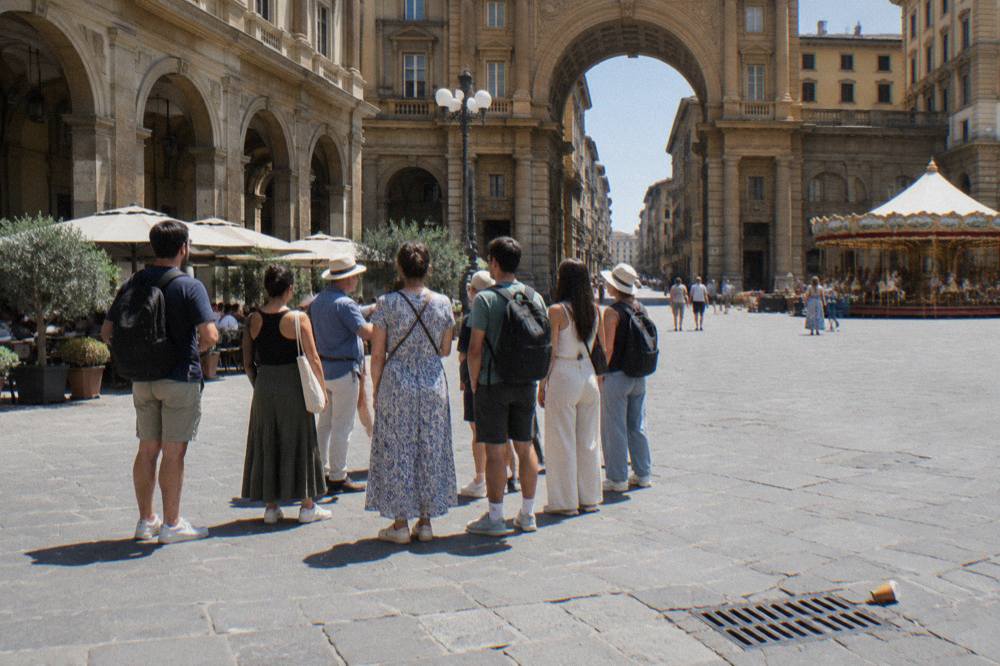
Walking tours belong firmly in the second column. This directory publishes 24 walks, 22 listed on GuruWalk and 2 on freetour.com, every one of them free to reserve with a pay-what-you-want model: the walker tips the guide at the end whatever the walk was worth. The Duomo to Santa Croce Route Walk, run by Another Florence on freetour.com and rated 9.1 out of 10 across 3,361 freetour.com reviews, meets at Piazza di Santa Maria Novella and runs 2 hours 30 minutes in English, Spanish and French. Its own page on this site explains the route in detail: Duomo to Santa Croce Route Walk. For comparison shoppers, the site's guide to free walking tours in Florence lays out the full roster by meeting point and language. One of the free walks goes through this part of the city: Art And Gastronomy Walk.
A daily budget therefore depends less on the city than on the itinerary. A visitor who books the Uffizi, climbs the tower and eats in a restaurant near Piazza della Signoria will spend seriously in a single day. A visitor who walks the squares, enters the cathedral during its free hours, times a museum visit to the first Sunday and takes a pay-what-you-want walk can pass an entire day spending only on food and a EUR 2.00 bus or tram ticket. Neither visitor sees a different city. The same doors are open to both, just at different prices at different moments.
How Much Does Florence Cost Per Day?
A museum-heavy day adds up fast at full price, with the Uffizi at EUR 25 on the day, Palazzo Vecchio at EUR 18, Torre di Arnolfo at EUR 20, Boboli at EUR 10 and Santa Croce at EUR 10, while a walking-and-squares day can land under EUR 15 plus food. Transport adds EUR 2.00 per urban single ticket on buses and trams.
The published prices are stable and checkable. The Uffizi charges EUR 25 bought on the day of entry and EUR 29 bought before the date of entry, with a EUR 16 ticket for entry from 4 p.m. onwards in force since 1 January 2026, and EU citizens aged 18 to 25 pay EUR 2 in the reduced categories the gallery itself publishes on its own tickets page. Palazzo Vecchio, a civic museum under the Comune di Firenze, charges EUR 18 full and EUR 12 for ages 18 to 25, with everyone under 18 free. Its tower is a separate ticket entirely: EUR 20 full, EUR 13 for ages 18 to 25, under-18 free.
| Cost item | Full price | Notes |
|---|---|---|
| Uffizi Gallery | EUR 25 on the day | EUR 29 in advance; EUR 16 from 4 p.m.; free first Sunday |
| Palazzo Vecchio museum | EUR 18 | EUR 12 ages 18 to 25; under-18 free; civic, no first-Sunday scheme |
| Torre di Arnolfo | EUR 20 | Separate from the museum ticket |
| Boboli Gardens | EUR 10 on the day | EUR 13 in advance; paid every day except the first Sunday |
| Santa Croce Basilica | EUR 10 | EUR 6 ages 12 to 17; own list of free days |
| Urban bus or tram ticket | EUR 2.00 | EUR 3.00 bought from the driver |
Transport is the smallest of the fixed costs. Autolinee Toscane sells the urban single at EUR 2.00, or EUR 3.00 if bought from the driver, with a ten-journey urban ticket at EUR 18.20, all listed on the operator's fare page. Most of the historic centre, though, is covered on foot, and the pay-what-you-want walks make even the guiding cost a matter of personal choice rather than a fixed fee.
What Costs More Than You Expect?
The surprises are the separate tickets and the booking fees. The Accademia is free to walk in on the first Sunday of each month under Domenica al Museo. The Duomo's dome, bell tower, baptistery, crypt and museum each need a pass, none of them inheriting the nave's free status. Boboli stays paid on every day except the first Sunday, even though it is an open-air garden.
The Galleria dell'Accademia is the clearest example of a price that looks simple and is not. The Accademia is a paid state museum, free on the first Sunday of the month under Domenica al Museo, walk-in with no advance reservation on that day; on other days a ticket is needed. The same first-Sunday rule applies at the Uffizi Gallery and the Cenacolo di Sant'Apollonia, while Mercato Centrale is free to walk in and you pay only for food and drink. The Duomo complex works the same way in reverse. The nave is free, but the dome, Giotto's Bell Tower, the Baptistery of San Giovanni, the Crypt of Santa Reparata and the Museo dell'Opera del Duomo are separate paid monuments, each opened by a Brunelleschi, Giotto or Ghiberti Pass. A visitor who assumes the free nave sets the tone for the whole complex will be caught out. One of the free walks goes through this part of the city: Chiara's Top Sights Walk.
Boboli Gardens catches people in the opposite direction. Because it is a garden, many assume it is open public space. It is not: it is a paid state garden, EUR 10 on the day and EUR 13 in advance, free only on the first Sunday of the month. The combined Boboli and Bardini ticket at EUR 15 is sold only at ticket offices on the day. Palazzo Vecchio's tower is a third trap: the EUR 18 museum ticket does not include it, and the EUR 20 tower ticket stands alone.
There is a way to spend nothing at all on guiding while still getting a proper introduction. The Trilingual Renaissance and Medici Walk, listed on GuruWalk and rated 4.88 out of 5 across 7,774 GuruWalk reviews, meets at Piazza San Lorenzo and runs 2 hours in English, Spanish and Italian. Like every walk in this directory, it is free to reserve and pay what you want.
What Is Free Instead?
More than most visitors expect: the cathedral nave, every square and bridge, the public fountains, the municipal WiFi, the historic markets and, on the first Sunday of every month, the entire state museum system including the Uffizi, the Accademia and Boboli. The next first-Sunday dates are 4 October, 1 November and 6 December 2026.
The first-Sunday scheme is the main free-entry route into state museums. Domenica al Museo, run by the Ministry of Culture, opens the state museums, monuments and gardens free on the first Sunday of every month, all year, at normal opening hours. In Florence that covers the Uffizi, Palazzo Pitti and its galleries, Boboli, the Vasari Corridor, the Accademia, the Bargello, the Medici Chapels, Palazzo Davanzati, Orsanmichele, San Marco, the Archaeological Museum and more, all listed on the Ministry's own scheme page. The Uffizi adds that on free days there is no reservation and no priority pass, so the queue is simply the queue. Civic museums such as Palazzo Vecchio and the Museo Novecento are not in the scheme, and the Opificio delle Pietre Dure museum is closed on Sundays and never takes part.
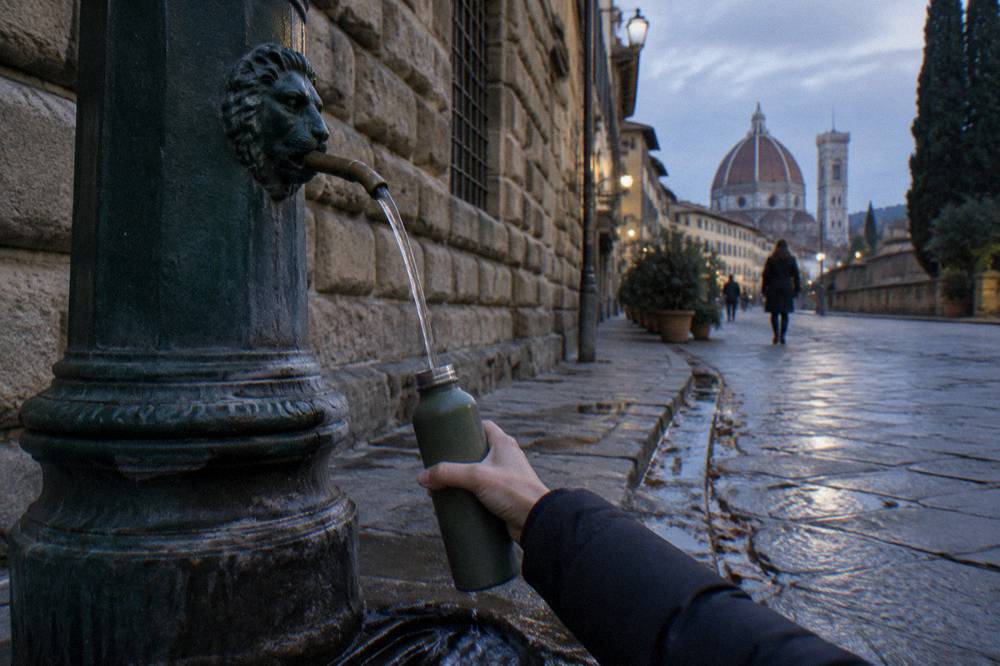
Outside the scheme, the free layer of the city is permanent. The cathedral nave asks for no ticket and no reservation, Monday to Saturday 10:15 to 15:45, closed to visitors every Sunday and during religious celebrations, with a dress code and no luggage. Piazza della Signoria, Piazza Santa Croce, Piazza della Repubblica and the other squares are public space, free at all times, though the museums and towers beside them are separate paid facts. The public fountains dispense free chilled still and sparkling water, with named central locations under Palazzo Vecchio in Piazza della Signoria, in Via dell'Agnolo at Sant'Ambrogio and in the public gardens of Piazza Tasso in the Oltrarno, so a bottle pays for itself on day one. FirenzeWiFi, the Comune's free public network, runs around the clock in enabled areas, with a 1 GB daily allowance at full speed. Other pages covering the same trip are gathered on Free Things To Do In Florence. A free walk through this part of Florence: Duomo To Santa Croce Route Walk.
Guiding, again, sits in the free column. The Official-Guides History Walk, listed on GuruWalk and rated 4.9 out of 5 across 470 GuruWalk reviews, meets at Piazza San Lorenzo and runs 2 hours in English and Spanish, free to reserve, pay what you want at the end.
For a fuller picture of the no-cost layer, the site's piece on things to do in Florence for free collects the squares, gardens and free-entry rules in one place.
Is The Tourist Tax Added To A Hotel Bill?
The Florence tourist tax rate and how it is collected are not published here, so no figure appears. What can be said is that the costs this page verifies, museum tickets, transport fares and food, are all charged at the point of purchase and none is a tax on the visitor. Hotel pricing sits outside the scope of this directory, which publishes no nightly rates.
This site covers attractions, transport, food markets and walks, and it does not publish hotel figures of any kind. The tourist tax is a municipal accommodation charge, and the pages behind this article, the operators' own ticket pages, the Ministry scheme page and the transport operator's fare page, say nothing about it. The honest answer is that a visitor should expect an accommodation tax in Italian cities as a general matter, but the rate and the collection method for Florence should be confirmed with the accommodation itself at booking, not with a travel directory.
None of the costs described in this article is a tax, though each is a charge you pay at the door or in advance. The EUR 25 Uffizi ticket is a gallery price. The EUR 2.00 bus ticket is an operator fare. The EUR 10 Santa Croce entry is the Opera di Santa Croce's own charge, with its own list of free days. Each is avoidable, reducible or free on a set date, which is exactly what a tax is not.
How Do You Eat Well For Less?
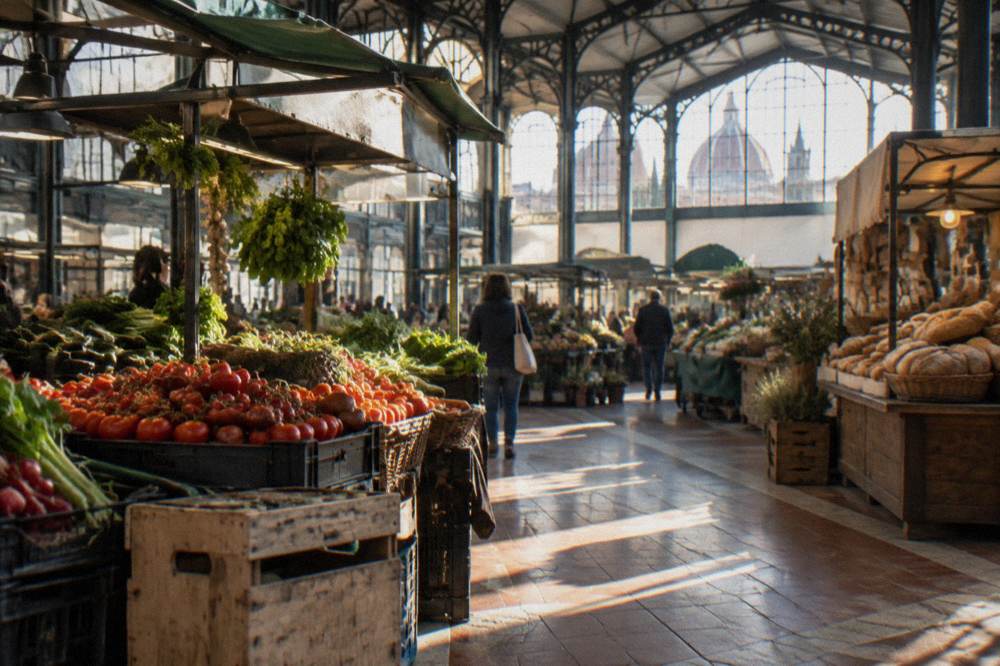
The two historic food markets cost nothing to enter, and the market halls are where the city's food budget stretches furthest. Mercato di Sant'Ambrogio, free to walk through, runs Monday to Saturday 07:00 to 14:00 in Piazza Ghiberti. Mercato Centrale in San Lorenzo is free to walk in, and you pay only for food and drink.
Sant'Ambrogio is the neighborhood market, and its hours, published by the Comune di Firenze on the city's historic markets page, make it a morning errand rather than a dinner plan: Monday to Saturday, 07:00 to 14:00, free to walk through, paying only for what you buy. Mercato Centrale, next to San Lorenzo, is likewise free to enter and pay-only-for-what-you-eat; its opening hours are stated differently by the operator and by the Comune, so this site publishes none, and the practical advice is simply to walk in and see.
The free-water network feeds straight into the food budget. The fountains dispense chilled still and sparkling water at no cost, and the full map is in the Feel Florence app under the useful-information section, so the daily spend on bottles drops to zero. Between a market lunch, fountain water and a pay-what-you-want walk in the afternoon, the fixed costs of a full day in Florence can be reduced to a single EUR 2.00 transport ticket, and even that only if the day leaves the centre.
Is It Cheaper Out Of Season?
Seasonal hotel and flight prices vary widely, so no seasonal saving can be stated. What they do show is that costs in Florence depend on the date of the month and the hour of the day: the first Sunday of each month is free under Domenica al Museo, and the Uffizi charges EUR 16 instead of EUR 25 for entry from 4 p.m. onwards, a rule in force since 1 January 2026.
The first-Sunday scheme does not pause for winter. Domenica al Museo runs every month of the year, and the next dates on the Ministry's calendar are 4 October, 1 November and 6 December 2026, straight through the shoulder season. A visitor in November gets the same free Uffizi, the same free Accademia walk-in and the same free Boboli as a visitor in June. The Uffizi's afternoon rule is the other lever: EUR 16 for entry from 4 p.m. onwards, against EUR 25 for a standard day ticket, a saving that exists every day of the year and belongs to the clock rather than the calendar.
Seasonal accommodation pricing is not published, so no nightly rates or seasonal ranges can be stated. The honest framing is that Florence's controllable costs are date-based and hour-based, not season-based, and that a visitor who plans around the first Sunday, the afternoon ticket and the free layer of the city can compress the bill in any month. The walks, all 24 of them, 22 on GuruWalk and 2 on freetour.com, are pay what you want in every season, and their pages on this site carry meeting points, languages and durations for planning.
Common Questions About Is Florence Expensive For Tourists?
Is Florence Expensive For Tourists?
Florence is expensive at the major ticket offices, with the Uffizi at EUR 25 on the day and Palazzo Vecchio at EUR 18, but a large layer of the city is free: the cathedral nave, all the squares and bridges, the public fountains, the historic markets and the entire state museum system on the first Sunday of every month. The walking tours, 22 on GuruWalk and 2 on freetour.com, are free to reserve and pay what you want.
How Much Does Florence Cost Per Day?
A museum-heavy day adds up fast at full price, covering the Uffizi, Palazzo Vecchio and one garden or basilica. A day built on squares, the free cathedral nave, a market lunch and a pay-what-you-want walk can land under EUR 15 plus food, with a EUR 2.00 urban bus or tram ticket only if the day leaves the centre.
Which Florence Museums Are Free On The First Sunday?
The state museums: the Uffizi, Palazzo Pitti and its galleries, Boboli, the Vasari Corridor, the Accademia, the Bargello, the Medici Chapels, Palazzo Davanzati, Orsanmichele, San Marco and the Archaeological Museum, among others. Civic museums such as Palazzo Vecchio and the Museo Novecento are not in the scheme. The next dates are 4 October, 1 November and 6 December 2026.
Is The Duomo Free To Enter?
The nave of the Basilica di Santa Maria del Fiore is free, no ticket and no reservation, Monday to Saturday 10:15 to 15:45, closed to visitors every Sunday and during religious celebrations, with a dress code and no luggage. The dome, bell tower, baptistery, crypt and museum are separate paid monuments opened by a Brunelleschi, Giotto or Ghiberti Pass, and none of them inherits the nave's free status.
Are The Free Walking Tours Really Free?
Yes, in the specific sense that they cost nothing to reserve and the walker tips the guide at the end whatever the walk was worth. All 24 walks in this directory, 22 on GuruWalk and 2 on freetour.com, work on that pay-what-you-want model, and no money figure appears against any of them.
How Do You Eat Cheaply In Florence?
Use the historic markets. Mercato di Sant'Ambrogio is free to walk through, Monday to Saturday 07:00 to 14:00 in Piazza Ghiberti, and Mercato Centrale in San Lorenzo is free to walk in, paying only for food and drink. Refill bottles at the public fountains, which dispense free chilled still and sparkling water at named central spots including under Palazzo Vecchio.