Is Florence Worth Visiting On A Tight Budget?
A practical answer for budget travellers: what stays free in Florence, what you genuinely miss without tickets, and how to plan a full free weekend in the city.
Is Florence Worth Visiting On A Tight Budget?
Yes, in a specific and testable sense: the cathedral nave is free, the squares and bridges are free, the viewpoints are free, San Miniato al Monte is free, and every state museum drops its ticket on the first Sunday of each month. What is paid, the Uffizi, the dome, the Accademia, is paid on a known schedule, so a budget visitor can plan around it rather than being surprised by it.
The honest way to answer this question is to split the city into what it gives away and what it charges for. Florence gives away an unusual amount. The nave of the Basilica di Santa Maria del Fiore needs no ticket and no reservation. Piazza della Signoria, Ponte Vecchio and Piazzale Michelangelo are public space, free at all times. The Abbey of San Miniato al Monte states on its own page that entry is free and no booking is needed. Add the historic markets, the public drinking fountains and the first-Sunday museum scheme, and a visitor who spends nothing still sees a great deal of the city.
What Florence charges for is equally clear. The state museums, the Uffizi at EUR 25 bought on the day, Palazzo Vecchio at EUR 18, the Duomo's dome and bell tower by pass, sit behind tickets with published prices. A tight budget does not make those prices disappear. It changes the question from "what can I see" to "which of these do I want enough to pay for, and on which day". A free walk through this part of Florence: Dante, The Inventor Of Hell.
This site exists because that second question has good answers. There are 24 free, pay what you want walks in the city, 22 on GuruWalk and 2 on freetour.com, run by independent local guides, and they cover the same streets a paid tour would. The walks below are three of them, each free to reserve with the tip paid to the guide at the end.
If your budget is tight but not zero, the free layer plus one or two chosen tickets is the pattern that works. If it is genuinely zero, the free layer alone still fills days, and the rest of this guide shows exactly how.
Is Florence Worth It Without Paying For Entry?
Yes. The free layer includes the cathedral nave, free Monday to Saturday 10:15 to 15:45, Piazza della Signoria and its open-air sculpture, Ponte Vecchio, Piazzale Michelangelo, San Miniato al Monte with its published hours, and the Sant'Ambrogio market. None of these asks for a ticket, and together they cover the Duomo, Signoria, Oltrarno and San Niccolo quarters.
Start with the cathedral. The Opera di Santa Maria del Fiore states plainly that no ticket is required to enter the cathedral and admission is always free, Monday to Saturday 10:15 to 15:45, closed to visitors every Sunday and during religious celebrations. A dress code applies and luggage is not allowed. The dome, the bell tower, the baptistery, the crypt and the museum are separate paid monuments and never inherit the nave's free status, which is the single most common budget trap in the city.
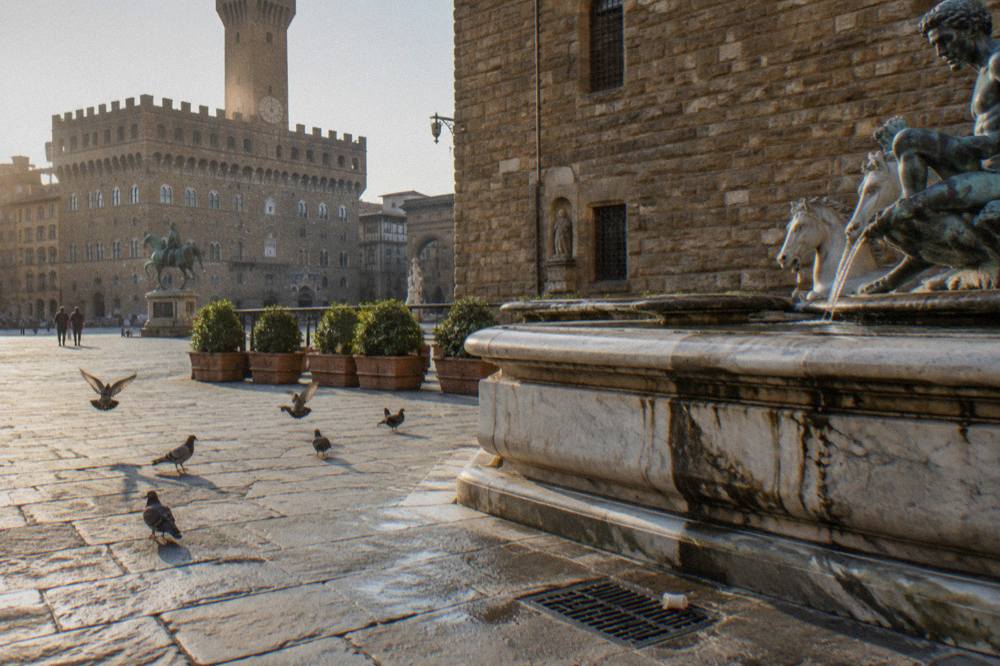
The squares cost nothing and hold a great deal. Piazza della Signoria is free to walk at all times; Palazzo Vecchio beside it is a paid civic museum at EUR 18 full, its tower a separate EUR 20 ticket, and the Loggia dei Lanzi needs a free ticket that since 23 January 2026 can only be obtained in person at its entrance. Piazza Santa Croce is free while the basilica behind it is paid with its own free days. Ponte Vecchio is free to walk across at all times, and its shops are private. A free walk through this part of Florence: Duomo To Santa Croce Route Walk.
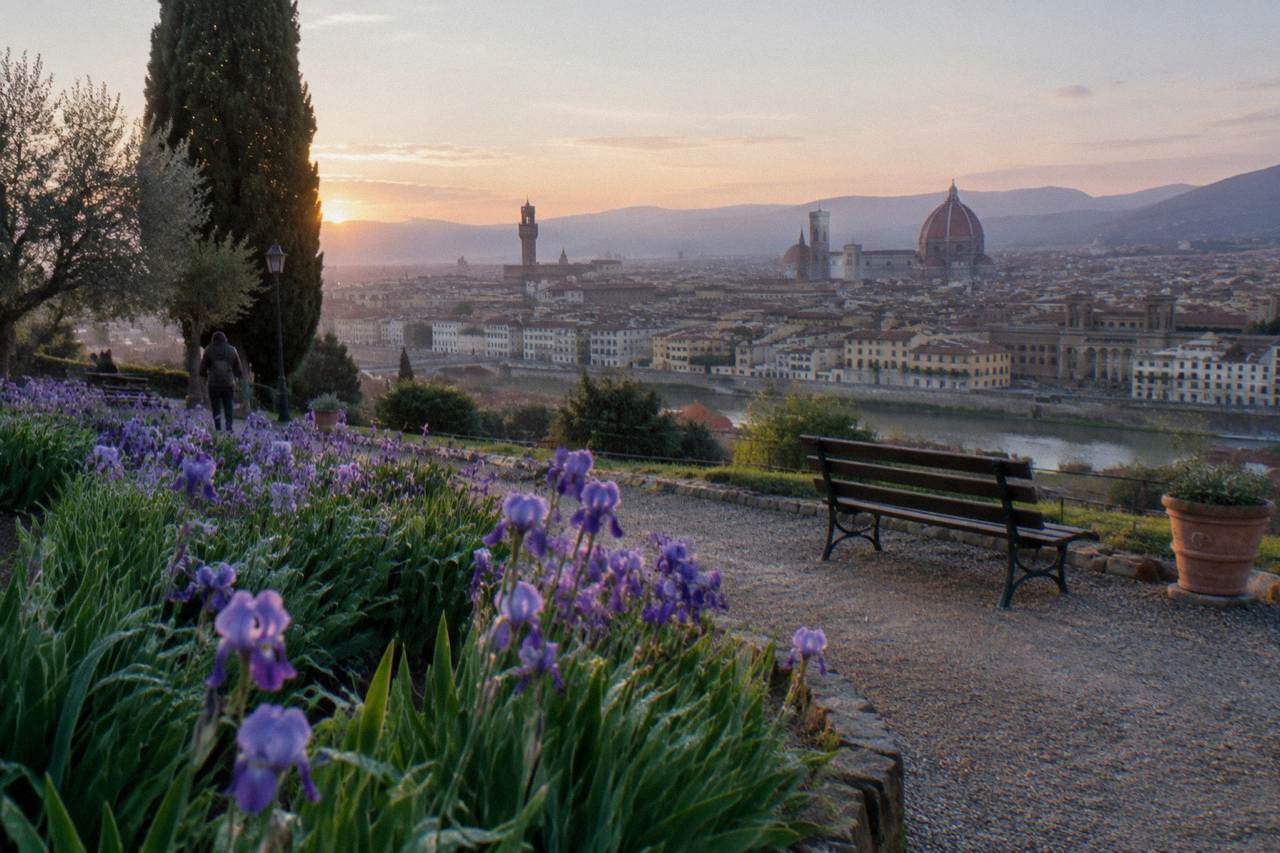
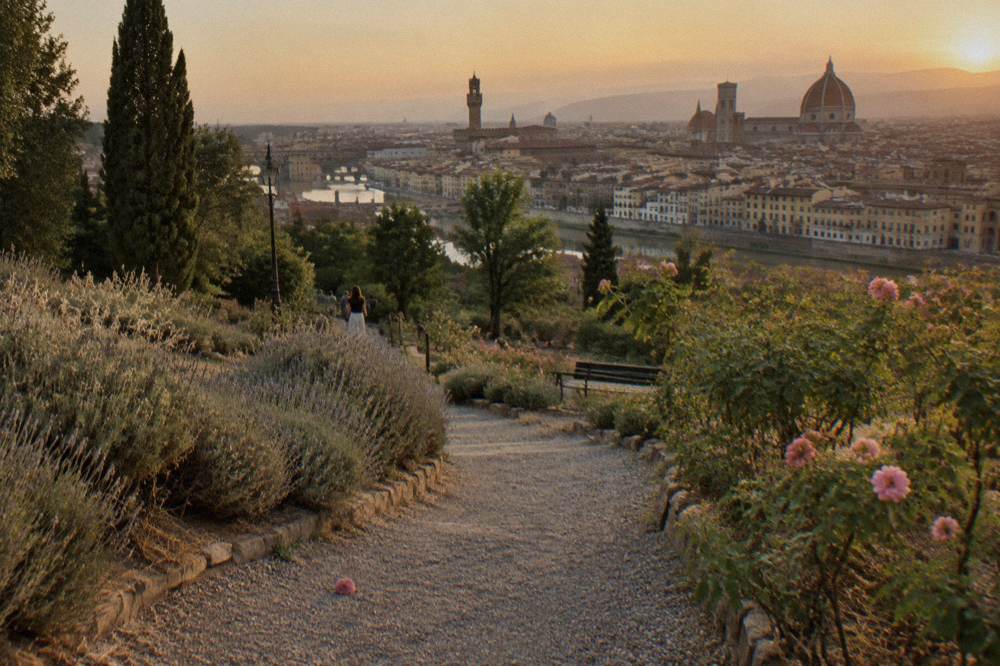
Across the river, the free layer continues. Piazzale Michelangelo is a public viewpoint terrace, free and open at all times. The Abbey of San Miniato al Monte is free to enter with no booking, Monday to Saturday 09:30 to 13:00 and 15:30 to 19:00, Sunday 08:15 to 13:00 and 15:30 to 19:00, and not visitable during liturgical celebrations. The Sunday 17:30 mass is in Latin with Gregorian chant. On the way between them, the Giardino delle Rose is a free municipal garden, and the public drinking fountains, including one under Palazzo Vecchio, dispense free chilled still and sparkling water if you carry a bottle.
| Free place | Condition | What the sources say |
|---|---|---|
| Cathedral nave (Santa Maria del Fiore) | Free, no ticket | Monday to Saturday 10:15 to 15:45, closed to visitors Sundays |
| Piazza della Signoria | Free at all times | Palazzo Vecchio EUR 18 and tower EUR 20 are separate paid tickets |
| Ponte Vecchio | Free to walk across | Shops on the bridge are private |
| Piazzale Michelangelo | Free, open at all times | Public viewpoint terrace above the Arno |
| San Miniato al Monte | Free, no booking | Closed to visits during liturgical celebrations |
| Mercato di Sant'Ambrogio | Free to walk through | Monday to Saturday 07:00 to 14:00, Piazza Ghiberti |
| Loggia dei Lanzi | Free, but ticketed | Free ticket in person at the entrance since 23 January 2026 |
That table is the shape of a free day in Florence. Two of its rows, the cathedral and San Miniato, are interiors most cities would charge for. The rest is public space, which in Florence is not leftover space but the main stage of the city.
What Do You Miss If You Pay For Nothing?
You miss the Uffizi's galleries, the Accademia, the interior of Santa Croce outside its free days, the Boboli Gardens on paid days, and every part of the Duomo complex except the nave. Each of those has a published price or a pass, and each has a free route in: the first-Sunday scheme for the state museums and Santa Croce's own free-day list for the basilica.
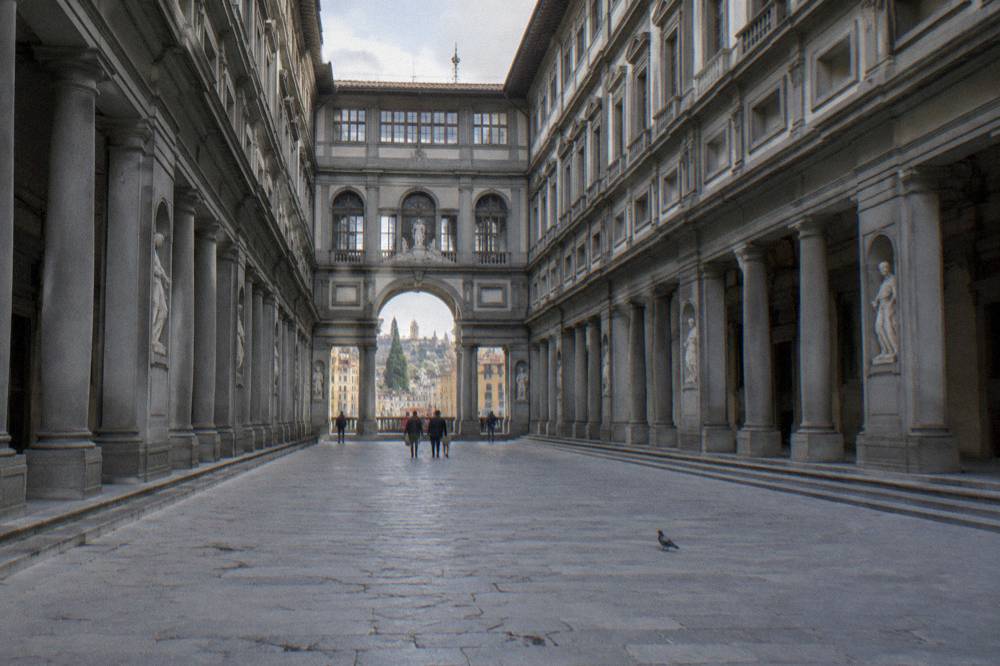
Be concrete about the losses. The Uffizi is EUR 25 bought on the day of entry and EUR 29 bought before, with a EUR 16 ticket for entry from 4 p.m. onwards. The Accademia is a paid state museum, one of the state museums that join Domenica al Museo: entry is free on the first Sunday of each month, walk-in, with no advance reservation and no priority pass that day, so arrive early and expect a queue. The dome, bell tower, baptistery, crypt and Duomo museum each need a Brunelleschi, Giotto or Ghiberti Pass, and no pass price is stated here, so check the Opera di Santa Maria del Fiore's own Duomo site for current pass prices.
Santa Croce is EUR 10 full, EUR 6 for ages 12 to 17, with online booking adding EUR 1, and it is free on a published list of its own days: 1 January, the second Sunday of February, Easter, 13 June, 15 August, 14 September, 26 and 27 September, 4 October, the second Sunday of November, the Sunday before Christmas and 26 December. Boboli Gardens is EUR 10 on the day and EUR 13 in advance, and it is free only on the first Sunday of the month, never on other days despite being open air.
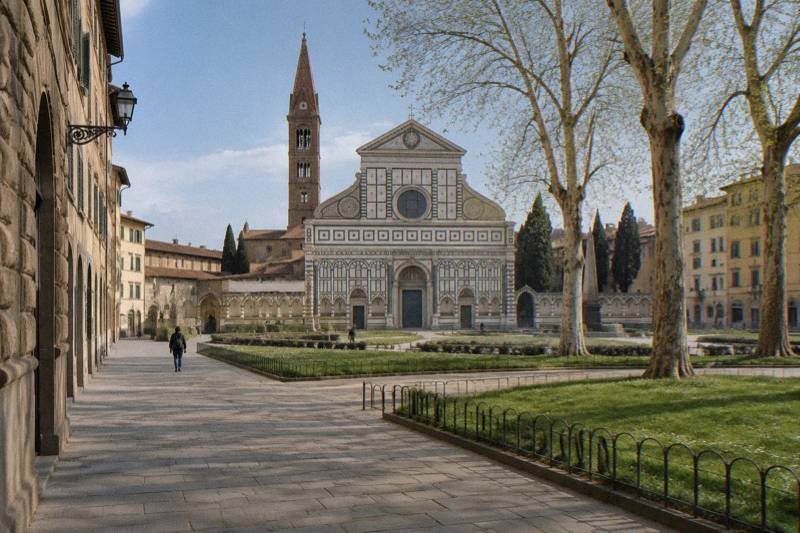
The walk that connects this paid-and-free patchwork for nothing is the Duomo to Santa Croce Route Walk, run by Another Florence on freetour.com. It meets at Piazza di Santa Maria Novella, lasts 2 hours 30 minutes, runs in English, Spanish and French, and is rated 9.1 out of 10 across 3,361 freetour.com reviews. It is free to reserve, pay what you want, and the walker tips the guide at the end whatever the walk was worth.
What you do not miss is the street-level city. The Duomo's exterior, the piazza around it, the Santa Croce square and the whole stretch of public space between them are free regardless of what the interiors charge. A visitor who pays for nothing still walks the same route the paid monuments sit on, and the free days exist to close the gap on the interiors.
One more honest note: the free days are popular for the same reason they are free. The Uffizi states that on first Sundays there is no reservation and no priority pass, which means everyone queues on equal terms. That is the trade, and it is a fair one for a tight budget.
What Is Worth Booking Ahead?
The Uffizi on any day except the first Sunday, when no reservation exists and everyone walks in; the Vasari Corridor, which requires a reservation even on free days; and Santa Croce if you want a set time, since online booking adds EUR 1 per ticket. Almost everything else in the free layer needs no booking at all. A free walk through this part of Florence: Art And Gastronomy Walk.
The Uffizi's own tickets page sets the pattern. EUR 25 on the day, EUR 29 in advance, EUR 16 from 4 p.m. onwards, groups of 11 or more paying an extra EUR 70. On the first Sunday of each month the reservation system is switched off for the free day, and the Uffizi says disabled visitors and carers and pregnant women are the only exceptions with any priority. So the decision is simple: book ahead on a paid day for a chosen time, or go unbooked on a free day and accept the queue. The full index of guides sits on Free Things To Do In Florence.
The Ministry's own page, Domenica al Museo on cultura.gov.it, lists the Florence institutes in the scheme: the Uffizi, Pitti and its galleries, Boboli, the Vasari Corridor, the Accademia, the Bargello, the Medici Chapels, Palazzo Davanzati, Orsanmichele, San Marco, the Archaeological Museum, the two Cenacoli, the Castello garden, Petraia and Villa Il Ventaglio. Not on the list: the Opificio delle Pietre Dure, Giardino Bardini, Palazzo Vecchio, Museo Novecento and the other civic museums. That split between state and civic is the whole booking logic of the city, and the Uffizi's ticket detail is on the Uffizi tickets page.
For the walks, no money changes hands at booking. A free walk on GuruWalk or freetour.com is reserved at no cost, and the tip is settled with the guide at the end. If you want to read more about how the two platforms work in this city, the guide is GuruWalk legit in Florence covers it in detail.
What Does A Free Weekend Look Like?
A workable free weekend runs the markets and the nave on Saturday, the viewpoints and San Miniato on Sunday morning, and the state museums on the first Sunday of the month, when the Uffizi, the Accademia and their peers drop their tickets. Every element of that plan comes from a published free rule, not from a discount or a workaround.
Here is one such weekend, built only from the facts above. Saturday: the Mercato di Sant'Ambrogio in Piazza Ghiberti, free to walk through, Monday to Saturday 07:00 to 14:00, then the cathedral nave inside its 10:15 to 15:45 hours, then Piazza della Signoria and the Loggia dei Lanzi with its free on-site ticket. Sunday, if it is not the first of the month: Piazzale Michelangelo and the Giardino delle Rose, then San Miniato al Monte inside its Sunday hours of 08:15 to 13:00 and 15:30 to 19:00, being aware that visits pause for liturgical celebrations.
If the Sunday is the first of the month, the plan changes shape. The state museums open free at normal hours, the Uffizi with no reservation that day, and the trade is the queue. Santa Croce, which is not in the state scheme, has its own separate list of free days, and 4 October 2026 happens to sit on both lists at once, a state free day and a Santa Croce free day, though each belongs to a different operator. The full museum-by-museum breakdown is in which Florence museums are free on the first Sunday.
| Slot | Plan | The rule that makes it free |
|---|---|---|
| Saturday morning | Mercato di Sant'Ambrogio | Free to walk through, Monday to Saturday 07:00 to 14:00 |
| Saturday midday | Cathedral nave | Free, no ticket, Monday to Saturday 10:15 to 15:45 |
| Saturday afternoon | Piazza della Signoria, Loggia dei Lanzi | Public square; Loggia needs a free ticket collected at its entrance |
| Sunday morning | Piazzale Michelangelo, Giardino delle Rose | Public viewpoint and free municipal garden |
| Sunday, first of the month | State museums free | Domenica al Museo, no reservation at the Uffizi that day |
| Any first Sunday | Santa Croce if on its own free-day list | Opera di Santa Croce free days, separate from the state scheme |
Getting around the plan costs little. The urban single ticket on Autolinee Toscane buses and trams is EUR 2.00, or EUR 3.00 bought from the driver, per the Autolinee Toscane ticket page. Much of the weekend above is walkable in the ordinary sense of being in one contiguous centre, though no distances are claimed here. For a longer list of no-cost options, see free things to do in Florence for free.
Is A Free Walking Tour Enough?
As an introduction to the city, yes: the free walks on GuruWalk and freetour.com are real guided walks led by independent local guides, free to reserve, with the tip paid at the end. They do not replace museum interiors, but they cover the streets, the quarters and the stories around them, which is the layer a tight budget visitor sees most of anyway.
The mechanism is simple and worth stating plainly, because it is the part people distrust. A walk is free to reserve. You turn up at the meeting point, the guide leads the walk, and at the end you tip whatever the walk was worth. The platform, GuruWalk or freetour.com, lists the walk and carries its reviews. This site runs none of these walks and takes no booking; it points at them.
The Trilingual Renaissance and Medici Walk, run by Free Walking Tours in Florence on GuruWalk, meets at Piazza San Lorenzo and lasts 2 hours, in English, Spanish and Italian. It is rated 4.88 out of 5 across 7,774 GuruWalk reviews, which is a review pool large enough to mean something. For a first visit built on a tight budget, a walk of this kind does the framing that a guidebook does badly, and it costs nothing up front.
Other walks in the city take different angles. The Art and Gastronomy Walk meets at Piazza dell'Unità Italiana and runs in English and Italian, rated 4.92 out of 5 across 3,189 GuruWalk reviews. The Storyteller Walk meets at Piazza San Lorenzo, runs 2 hours 15 minutes in English and Spanish, and is rated 4.73 out of 5 across 1,872 GuruWalk reviews. The Sunset Walking Tour on freetour.com meets at Piazza di Santa Maria Novella and is rated 9.1 out of 10 across 2,127 freetour.com reviews. Naming walks individually matters here, because the 24 shipped walks differ in language, duration and meeting point, and the right one depends on all three.
What a free walk cannot do is walk you into a paid monument. Entry tickets are separate, and on Chiara's Top Sights Walk the walk's own page states that entry tickets to the sights on its route are not included. That is stated for that walk, not as a general rule. The honest division of labour: a free walk for the city, a chosen ticket or a free day for the one or two interiors that matter to you.
How Do You Plan Around Closures?
Plan on three rhythms: the weekly one, the calendar one and the seasonal one. The cathedral nave closes to visitors every Sunday, San Miniato pauses for liturgical celebrations, the Medici Chapels and San Marco close Mondays, and the first-Sunday free days run on their own published dates, with the next on 4 October 2026.
The weekly rhythm is the one that catches people. The cathedral nave is closed to visitors every Sunday, all day, so a Sunday-only visitor who has not checked sees the Duomo from outside only. San Miniato al Monte is not visitable during liturgical celebrations, and its Sunday 17:30 mass in Latin with Gregorian chant is a scheduled closure of the visit, not an accident. The Medici Chapels are closed Mondays, San Marco is closed Mondays, and Santa Croce is closed 25 December. The basilica's own page, the Opera di Santa Croce visit page, gives its hours and its free-day list together, which is the right way to read any church in this city.
The calendar rhythm is the first-Sunday scheme: next 4 October 2026, then 1 November and 6 December 2026, for the state museums listed above. The seasonal rhythm matters on the hills: Forte di Belvedere is closed in winter, open 24 June to 26 October 2026, and the Giardino dell'Iris is closed outside its short spring window. The Giardino delle Rose keeps seasonal hours that change through the year.
Two practical notes for autumn 2026. National strikes are called for 2 and 30 October, with a Florence tram protest on 10 October and a regional general strike on 14 October, so transport on those days may be disrupted. And the Baptistery's vault mosaics are not visible from the ground during a restoration now in its third year, while Giotto's Bell Tower stays open through its own first full restoration, with works running to about 2030.
None of these closures break a tight-budget plan. They only sequence it. Put the cathedral nave on a Saturday, the museums on a first Sunday, San Miniato outside celebration times, and the rest of the free layer, the squares, the bridges, the markets and the viewpoints, wherever the days leave room.
Common Questions About Florence On A Budget
Is Florence Worth Visiting On A Tight Budget?
Yes. The cathedral nave, the main squares, Ponte Vecchio, Piazzale Michelangelo and San Miniato al Monte are all free, and the state museums are free on the first Sunday of each month. A tight budget changes which interiors you pay for, not whether you see the city.
Is The Cathedral Free To Enter?
Yes. The Opera di Santa Maria del Fiore states that no ticket is required and admission to the nave is always free, Monday to Saturday 10:15 to 15:45, closed to visitors every Sunday. The dome, bell tower, baptistery, crypt and museum are separate paid monuments.
Which Museums Are Free On The First Sunday?
The state museums in the Ministry's Domenica al Museo list: the Uffizi, Pitti and its galleries, Boboli, the Vasari Corridor, the Accademia, the Bargello, the Medici Chapels, Palazzo Davanzati, Orsanmichele, San Marco, the Archaeological Museum, the Cenacoli, the Castello garden, Petraia and Villa Il Ventaglio. Civic museums like Palazzo Vecchio and Museo Novecento are not in the scheme.
Are Free Walking Tours Really Free?
They are free to reserve and pay what you want. The walk costs nothing up front, the guide is an independent local guide, and at the end you tip whatever the walk was worth. The 24 walks listed on this site run on GuruWalk and freetour.com.
How Much Does Public Transport Cost?
The urban single ticket on Autolinee Toscane buses and trams is EUR 2.00, or EUR 3.00 if bought from the driver. A ten-journey urban ticket is EUR 18.20.