Is The Uffizi Free?
The Uffizi is a paid state museum with a free day on the first Sunday of every month. Here is who gets in without paying, what a ticket costs on a normal day, and what you can see for free around it.
Is The Uffizi Free To Enter?
No, not on an ordinary day. The Uffizi Gallery is a paid state museum operated by the Gallerie degli Uffizi: a full ticket costs EUR 25 bought on the day of entry and EUR 29 bought before the date of entry, and from 1 January 2026 a EUR 16 ticket covers entry from 4 p.m. onwards. Everyone enters free on the first Sunday of each month, with no reservation and no priority pass.
Those prices come straight from the Uffizi's own tickets page, which also sets out the other fare rules. Groups of 11 or more pay an extra EUR 70 on top of the tickets. A PassePartout valid five days costs EUR 40, or EUR 58 with the Vasari Corridor included. The after-4 p.m. ticket at EUR 16 is the one genuinely cheaper option on a normal weekday, and it exists because of a change that took effect on 1 January 2026.
| Ticket | Price | What to know |
|---|---|---|
| Full, bought on the day | EUR 25 | Same-day purchase at the gallery |
| Full, bought in advance | EUR 29 | Bought before the date of entry |
| Entry from 4 p.m. onwards | EUR 16 | In effect from 1 January 2026 |
| Under-18s | Free | Stated on the free-and-reduced page |
| EU citizens 18 to 25 | EUR 2 | Reduced rate, same page |
| Groups of 11 or more | Extra EUR 70 | Added to the group's tickets |
| PassePartout, 5 days | EUR 40 | EUR 58 with the Vasari Corridor |
The operator matters more than visitors usually realise. The Gallerie degli Uffizi is a state body that also runs Palazzo Pitti, the Boboli Gardens and the Vasari Corridor, and it is entirely separate from the civic museums run by the Comune di Firenze and from the Accademia and Bargello group. That is why the Uffizi joins the national first-Sunday free scheme while Palazzo Vecchio, standing in the same square, does not. The full breakdown of which museums open free on that day is in which Florence museums are free on the first Sunday.
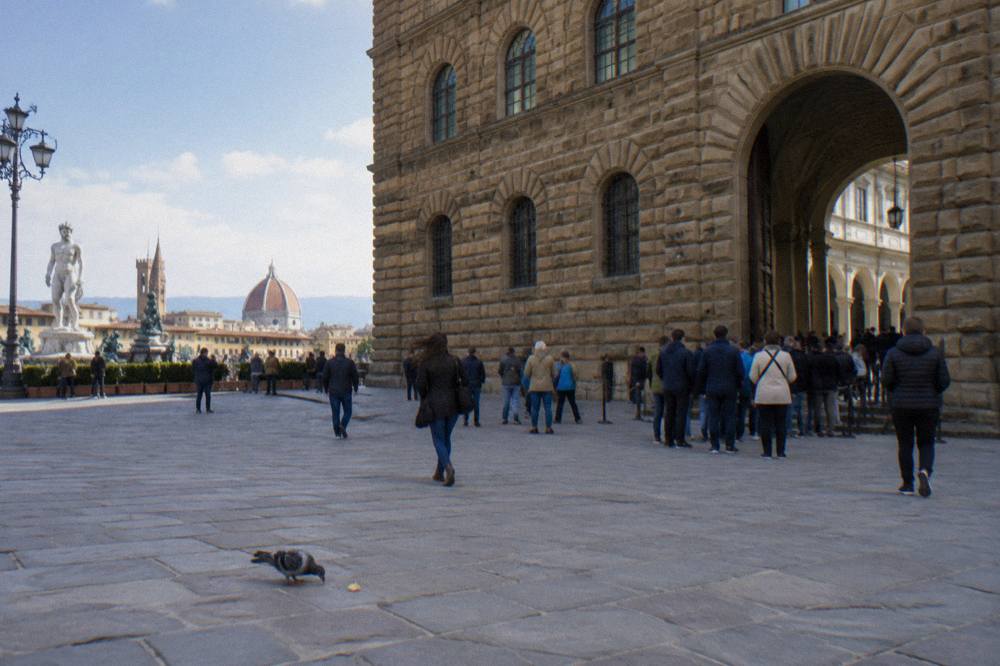
If a paid museum ticket is not in the plan at all, the city also has a layer of guided walks that cost nothing to reserve. This site lists 24 of them, 22 on GuruWalk and 2 on freetour.com, all free to book and pay what you want at the end. Three that meet in the historic centre are below.
Who Gets In Without Paying?
Under-18s enter the Uffizi free, and EU citizens aged 18 to 25 pay a reduced EUR 2. Everyone else pays the full price unless they arrive on the first Sunday of the month, when the whole museum opens free with no reservation and no priority pass. The Uffizi sets out its full free and reduced categories, including exceptions for disabled visitors, carers and pregnant women on free days, on its own free-and-reduced page.
The under-18 rule is the one families most often miss. A party with two adults and two children under 18 pays for two full tickets only. The EUR 2 rate for EU citizens aged 18 to 25 applies to the younger adults in a group too, so a 22-year-old EU national travelling with parents pays almost nothing compared with them.
The exceptions on the free day are worth reading before you queue. On first Sundays the Uffizi waives reservations and priority passes for everyone, but it keeps them for disabled visitors and carers and for pregnant women. That detail comes from the gallery's own free-entry notice, and it means those visitors do not lose their fast access just because the general public is walking in.
There is no resident scheme at the Uffizi itself. The civic museums run by the Comune have a separate free day, Domenica Metropolitana, but it applies only to residents of the Florence metropolitan area, and the Uffizi, being a state museum, is not part of it. Visitors should not plan around that day for the Uffizi; the first Sunday is the one that counts for everyone.
When Is It Free For Everyone?
On the first Sunday of every month, all year, under the Ministry of Culture's Domenica al Museo scheme. The next free Sundays are 4 October 2026, then 1 November and 6 December 2026. Entry is at normal opening hours, with no reservation and no priority pass, and booking fees do not apply on the free day. Temporary exhibitions inside the museum may still carry a charge.
The scheme is national and covers state museums, monuments and gardens. In Florence the Ministry's live list includes the Uffizi, Palazzo Pitti and its galleries, the Boboli Gardens, the Vasari Corridor, the Accademia, the Bargello, the Medici Chapels, Palazzo Davanzati, Orsanmichele, San Marco, the Archaeological Museum, the Cenacoli of Sant'Apollonia and San Salvi, the Castello garden, Villa La Petraia and Villa Il Ventaglio. The official scheme page is at cultura.gov.it/domenicalmuseo, and the Tuscany list there is updated in real time by the institutes themselves.
Two warnings sit inside that list. The Opificio delle Pietre Dure museum is a state museum that is not on the first-Sunday list, so "state museum" never automatically means "free on the first Sunday". And the civic museums, Palazzo Vecchio among them, are absent because they belong to the Comune, not the Ministry. The Uffizi is the headline name of the scheme in Florence, but it is far from the only door that opens.
One more planning note for the free day: the Uffizi waives its booking fee entirely, so nobody should pay a third party for a "free Sunday reservation". If a reseller offers priority entry on a first Sunday, that contradicts the gallery's own published rule that no reservation and no priority pass applies that day. The gallery's tickets page at uffizi.it is the source for every figure in this section.
What Can You See Of It From The Outside?
Piazza della Signoria, the square the Uffizi opens onto, is free public space at all times. The Loggia dei Lanzi at the square's edge is also free, but since 23 January 2026 you need a free ticket collected in person at its entrance, not online. Palazzo Vecchio in the same square is a paid civic museum at EUR 18, its tower a separate EUR 20 ticket, and a public drinking fountain stands under the palace. One of the free walks goes through this part of the city: Duomo To Santa Croce Route Walk.
The distinction between the square and the institutions around it is the honest way to plan a free hour here. The square itself is Comune public space: nothing to pay, no hours, no ticket. The Uffizi, Palazzo Vecchio and the tower are each ticketed, each under a different operator, and the Loggia sits in between, free but now gated by an on-site ticket issued at its own entrance since 23 January 2026.
| Place | Status | Cost |
|---|---|---|
| Piazza della Signoria | Free public square | Nothing |
| Loggia dei Lanzi | Free, ticket collected on site | Nothing, in person only |
| Uffizi Gallery | Paid state museum | EUR 25 on the day |
| Palazzo Vecchio museum | Paid civic museum | EUR 18 full, EUR 12 ages 18 to 25 |
| Torre di Arnolfo | Paid, separate ticket | EUR 20 full, EUR 13 ages 18 to 25 |
| Drinking fountain | Free | Nothing, under Palazzo Vecchio |
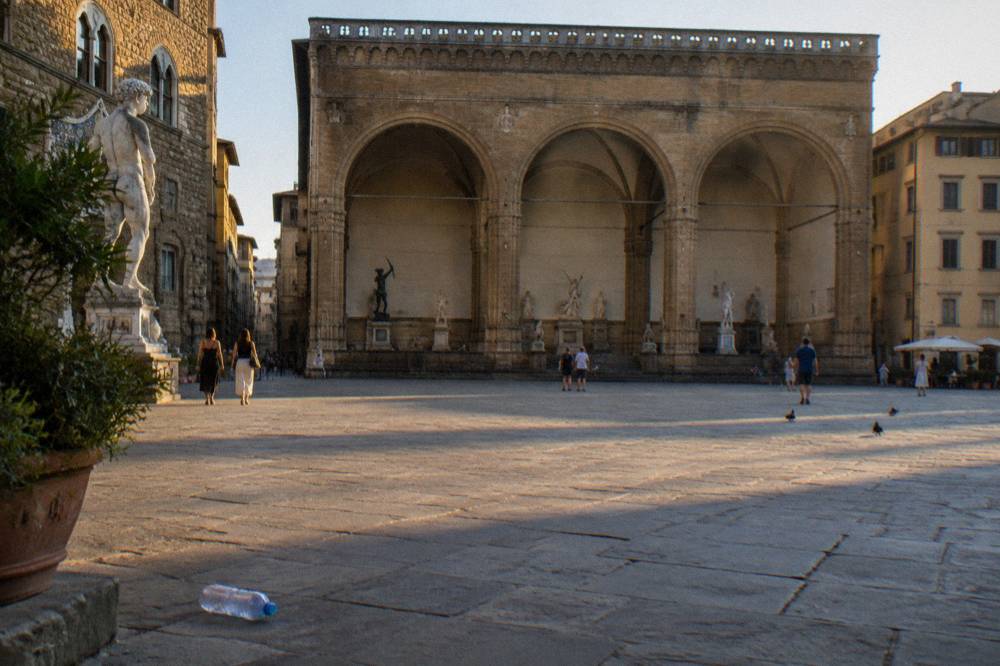
The fountain detail is small but useful on a warm day: the Comune confirms a public drinking fountain under Palazzo Vecchio, one of the chilled still and sparkling fountains scattered through the centre, so a bottle saves buying water while you walk the square. The Loggia's new ticket rule is the change most visitors will not have heard of; the Uffizi's own notice, in Italian, is the source, and it says the ticket can only be picked up at the entrance itself.
For the fuller picture of the square and everything around it, the Piazza della Signoria free guide walks through each of these in order, including which of them belong to the state, which to the Comune and which to nobody at all. One of the free walks goes through this part of the city: Art And Gastronomy Walk.
Is The Free Sunday Worth The Queue?
No official source publishes queue times for the Uffizi on free Sundays, so no honest figure can be given here. What is published is the mechanism: on the first Sunday there is no reservation and no priority pass for the general public, which means everyone who wants the free entry walks up and joins the same line. If the wait is not acceptable, the EUR 16 ticket from 4 p.m. or a normal paid day are the alternatives.
That is the whole honest answer. The gallery's own pages describe the free-day rule but say nothing about how long the line runs, and no figure for it has been published. What can be said is structural: a day with no bookings concentrates everyone into one walk-in queue, and a day with bookings spreads arrivals across timed slots. That is arithmetic, not anecdote.
There is also a practical middle path. The first Sunday of the month is free at every state museum in the city at once, which means the Uffizi's line and the Accademia's line form on the same morning. A visitor who wants the scheme without the squeeze can point the day at the smaller state museums instead, the Medici Chapels, San Marco or the Archaeological Museum, and save the Uffizi for a paid day with a timed entry. The Medici Chapels, for instance, cost EUR 11 on a normal day and suspend their daily guided service on free days, so the free visit is self-guided there.
The date itself is worth pinning down early. The next free Sundays are 4 October 2026, then 1 November and 6 December 2026, and the scheme runs every month of the year, so a trip that misses one Sunday simply lands on the next. Visitors tying the free day to a weekend city break should check which Sunday of their trip is the first of the month before booking anything else.
What Should You See Instead On A Normal Day?
On a normal paid day the honest alternatives are the other state museums that share the first-Sunday scheme, or the free layer of the city that never charges at all. Palazzo Pitti costs EUR 16 on the day, the Boboli Gardens EUR 10, and both open free on the first Sunday. Below the museums, the squares, bridges and markets are free by nature, and the pay-what-you-want walks cost nothing to reserve on any day.
The state alternatives give the scheme its real value. Palazzo Pitti, EUR 16 on the day and EUR 19 with advance reservation, holds the Palatine Gallery, the Modern Art Gallery, the Costume Gallery and the Treasury of the Grand Dukes, and joins the first-Sunday list alongside the Boboli Gardens at EUR 10. The Bargello is EUR 12, the Medici Chapels EUR 11, San Marco EUR 11 and the Archaeological Museum EUR 8 on ordinary days, and every one of them opens free on the same first Sunday as the Uffizi. A combined Pitti and Boboli ticket at EUR 22 on the day softens the cost if the free date does not line up with the trip.
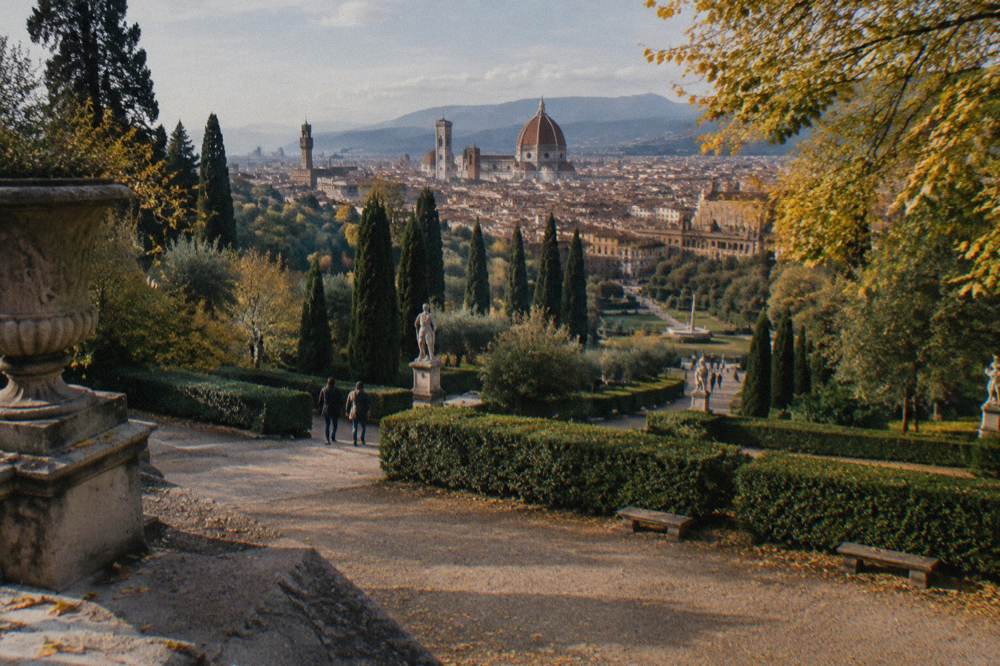
The walks are the other answer, and the one that costs nothing at all. The Duomo to Santa Croce Route Walk, run by Another Florence and listed on freetour.com, meets at Piazza di Santa Maria Novella, runs 2 hours 30 minutes in English, Spanish and French, and is rated 9.1 out of 10 across 3,361 freetour.com reviews. It is free to reserve and pay what you want at the end. The Duomo to Santa Croce Route Walk page carries the meeting-point details and the freetour.com listing behind it.
For a different angle on the same city, Dante, the Inventor of Hell is a 2-hour walk listed on GuruWalk, meeting at Piazza della Repubblica and running in English and Italian, rated 4.32 out of 5 across 22 GuruWalk reviews. Like every walk on this site it is free to book, and the walker tips the guide at the end whatever the walk was worth. Twenty-two of the 24 walks listed here run on GuruWalk, the other two on freetour.com, and none of them charges a booking fee.
Between museums and walks sits the free public layer that needs no plan at all: Piazza della Signoria, Ponte Vecchio, Piazzale Michelangelo, the markets and the drinking fountains. That layer is what this whole site, Free Things To Do In Florence, is built to map, and it works on the first Sunday of the month and every other day alike.
If a guided walk is the shape the day should take, these three are the centre-ground options: the Duomo to Santa Croce Route Walk on freetour.com, and the Trilingual Renaissance and Medici Walk and the Art and Gastronomy Walk, both on GuruWalk and both meeting in the San Lorenzo and Piazza dell'Unità Italiana area respectively.
Common Questions About The Uffizi
Is The Uffizi Free?
Not on an ordinary day. The Uffizi is a paid state museum: EUR 25 bought on the day, EUR 29 in advance, and EUR 16 for entry from 4 p.m. onwards. It is free for everyone on the first Sunday of each month, with no reservation and no priority pass.
Is The Uffizi Free To Enter?
Only on the first Sunday of the month, or for under-18s at any time. EU citizens aged 18 to 25 pay a reduced EUR 2. Everyone else pays the full ticket outside the free Sundays.
When Is It Free For Everyone?
On the first Sunday of every month under the Domenica al Museo scheme. The next dates are 4 October 2026, then 1 November and 6 December 2026. Temporary exhibitions may still be charged on the free day.
Who Gets In Without Paying?
Under-18s, and every visitor on the first Sunday of the month. Disabled visitors, carers and pregnant women keep reservation access on free days. The full list of free and reduced categories is on the Uffizi's own free-and-reduced page.
Can You Visit The Loggia Dei Lanzi For Free?
Yes. The Loggia is free, but since 23 January 2026 you need a free ticket, and it can only be collected in person at the Loggia's entrance, not online.
Do You Need To Book The Uffizi On The Free Sunday?
No. On first Sundays there is no reservation and no priority pass for the general public, and booking fees do not apply. You walk up and join the entry line.